
Hiring a Stump Grinder or Booking a Professional in Christchurch: What to Compare
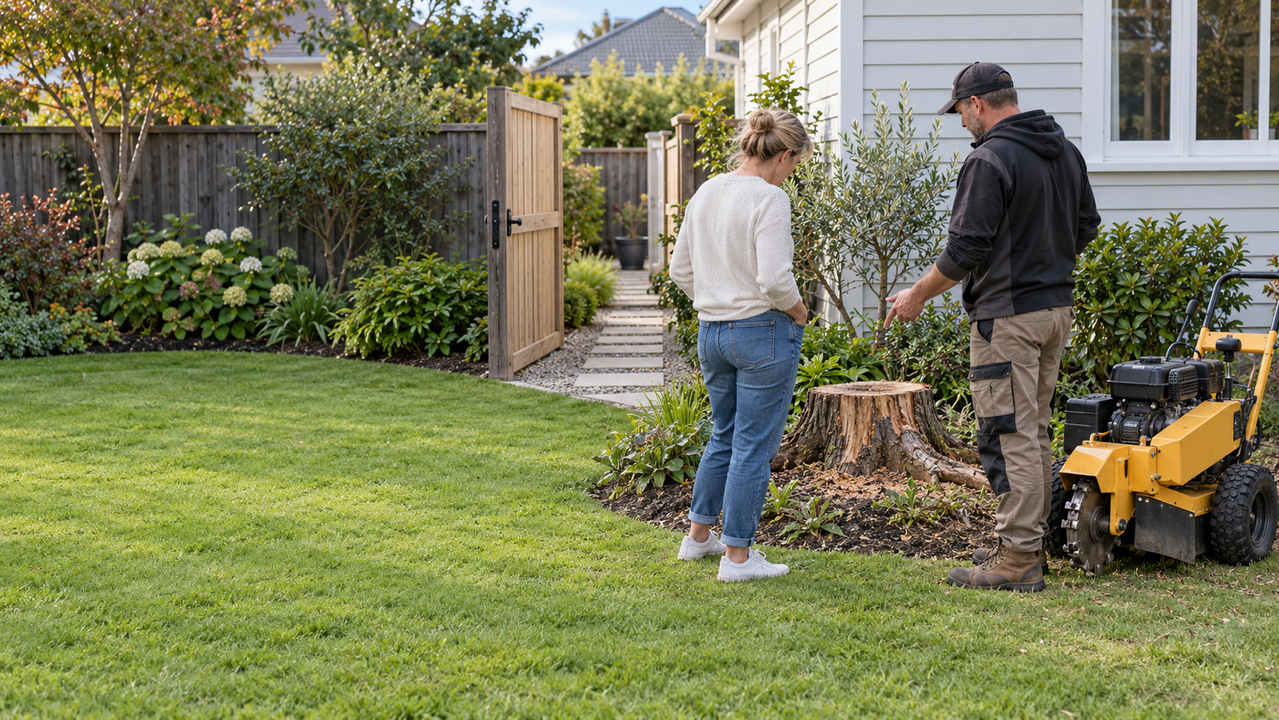
Hiring a stump grinder can look like an economical way to finish a tree removal project. You collect a machine, remove the obstruction and return it when the work is done. The decision becomes less simple when transport, access, operator experience and the condition of the ground are included. For Christchurch homeowners, a fair comparison starts with the whole job rather than the advertised hire rate.
Before reserving equipment, compare that option with a quote for professional stump grinding in Christchurch. Garden & Tree Men offers a grinding service for properties in the greater Christchurch area. Its published service description includes site assessment and cleanup, but you should still confirm the precise scope for your property, including the treatment area, handling of grindings and any preparation needed afterwards.
Decide what a finished job means to you
A stump that no longer projects above the lawn may satisfy one homeowner and leave another unable to continue a landscaping project. Write down what you intend to do next. Your target might be easier mowing, a new planting bed, space for a path or clearance requested by another contractor.
That purpose affects the amount of timber that needs to be removed. Grinding below the visible surface does not normally eliminate every root or prepare structural ground automatically. If you intend to place a footing or other built feature in the same position, get the relevant requirements before selecting a machine or accepting a general garden quote.
A clear endpoint also makes the hire comparison more realistic. Include clearing the grindings, leaving the area safe and preparing for the next stage. If you compare a machine hire period against a professional service that includes those tasks, the two prices are covering different things.
Find out whether the available machine suits the site
The term stump grinder covers equipment with different dimensions, capabilities and operating requirements. A machine that is convenient to hire is not automatically suited to your access route, stump or ground conditions. Confirm the specifications of the actual model available rather than rely on a photograph of a similar unit.
Measure the narrowest part of the route, including gate hardware and corners. Consider thresholds, steps, slopes, overhead restrictions and the space needed to turn and work. A machine can fit through a gate yet still be unsuitable for the area beyond it. Explain the route to the hire provider before making a booking.
The stump also needs describing. Provide its approximate diameter, height and location, along with photographs showing the base and nearby structures. Mention multiple stumps individually. If the hire provider cannot confirm that the equipment and your experience are appropriate, a contractor assessment may be the more useful next step.
Include transport and loading in the comparison
Equipment collection can require more than an available car and a free morning. Ask the supplier what transport arrangements are needed for the particular machine, including any trailer, towing capacity, loading arrangements and delivery options. Do not assume that you can safely improvise those arrangements after arriving at the depot.
Work out how much time collection and return will take within the hire period. Traffic, depot opening hours and the journey from your property can reduce the time available for the actual job. If you need equipment delivered, include that charge when comparing the total with a professional booking.
A contractor’s price generally reflects bringing suitable equipment and an operator to the property, but access can still affect that price. Share accurate information at the quotation stage. Discovering an unsuitable passage or loading area on the day can delay either a hire project or a professional visit.
Be realistic about operator experience
A stump grinder is powered cutting equipment, not simply a larger version of an ordinary garden tool. Familiarity with mowing or hedge trimming does not establish competence with the machine you plan to hire. The relevant question is whether you can understand and follow its instructions and manage the particular work environment.
Ask the hire supplier about the handover, model-specific instructions and required protective equipment. Read the instructions before committing to the work. If the task, controls or site conditions are beyond your experience, paying for a machine does not create a reason to proceed regardless.
Professional service is valuable partly because an experienced operator can assess how the equipment relates to the site. That does not remove the need to ask questions about the provider. Discuss relevant experience, how the work area will be managed and what happens if conditions differ from the initial description.
Check what is below ground before anything is booked
A stump near a house, garage, driveway or garden feature may be close to buried services. Irrigation, outdoor lighting and private drainage can also cross areas that appear to be ordinary lawn. Describe what you know and acknowledge what you do not know before deciding that a site is straightforward.
before dig provides a starting point for obtaining information about underground infrastructure in New Zealand. Returned information does not mean every asset has been identified or its exact position established. Private installations and missing records may require further enquiries or locating work before the proposed grinding can be assessed safely.
With a contractor, clarify who will organize those checks and what information they need from you. With hire equipment, that responsibility does not disappear because the supplier has provided the machine. Unresolved services are a reason to pause the plan and seek appropriate help, rather than select a smaller grinder and assume the problem is avoided.
Compare a full hire budget with a written professional scope
The basic hire rate is only one item. Ask about the charging period, GST, deposit or bond, fuel arrangements, delivery, trailer hire, cleaning requirements and return conditions. Establish how equipment damage is handled and what any waiver or cover actually includes. Different suppliers and agreements can treat these items differently.
Then add the costs outside the rental agreement. You may need protective equipment, transport for grindings, replacement soil or help with reinstatement. Your own time has value too, particularly if collection, familiarization, work and cleanup will occupy most of a weekend.
A written quote from Garden & Tree Men gives you another scope to assess alongside that budget. Ask what the quoted grinding includes and whether material removal, additional roots and ground reinstatement are included or separate. The aim is to compare the same finished result, rather than assume that either hire or professional work is always cheaper.
Ask how the surrounding property will be protected
Grinding can affect more than the stump. The work area may be close to windows, vehicles, fences, paving or neighboring gardens. A suitable plan needs to account for debris and keep other people clear. Do not turn generic online guidance into a substitute for the instructions and exclusion arrangements required for the actual machine and site.
Before a professional visit, ask what you should move and which areas need to remain unavailable. Children’s play equipment, garden furniture and parked vehicles may influence access or the work area. Neighbors or other occupants may need advance notice if an ordinarily shared route will be temporarily restricted.
Hire also requires you to manage those practical details. Consider pets, visitors, delivery drivers and anyone who might enter unexpectedly. If keeping the site controlled is difficult, that should weigh in the decision. Protective equipment for the operator alone does not resolve the wider property arrangements.
Allow enough time for a difficult stump
Stump diameter matters, but it is not a complete predictor of time. The shape of the root crown, the timber, access and the intended treatment area can all affect the job. Old stones, embedded objects or previous landscaping may add uncertainty that is not apparent from the cut surface.
A limited hire window can create pressure to finish despite unexpected conditions. Discuss what happens if the work takes longer, the machine proves unsuitable or an obstruction is discovered. Include the possibility of returning the equipment without completing the stump when deciding whether the potential saving is worthwhile.
With a professional, ask how a change in scope will be communicated and approved. A clear process helps you avoid surprises while allowing the operator to stop and reassess. Neither route should depend on guessing that an unknown buried obstacle can simply be worked through.
Plan cleanup before you create the material
Grinding turns solid timber into a loose mixture of wood fragments and soil. That material must be managed even when the visible stump has disappeared. Agree where it can temporarily sit, whether it can be moved through the property and who will remove anything you do not want to retain.
If you hire a machine, include the time and transport needed for cleanup. Ordinary household disposal arrangements may not suit the volume or composition produced. Check the receiving facility’s requirements rather than assume that soil mixed with grindings will be accepted on the same terms as fresh garden clippings.
For a professional booking, ask what cleanup means in practice. It might mean a tidy work area, removal of excess material or another defined finish. Confirming those details avoids discovering that a mound left behind is your responsibility just when you expected to start sowing grass or planting.
Separate grinding from reinstating the garden
Once the stump has been ground, the area may still require preparation for its next use. Fresh grindings are not equivalent to a finished growing medium. Ask what material should remain and how the ground should be prepared for the lawn or planting you have planned.
Settlement can also affect the finished level as buried organic material breaks down. A surface that appears even immediately after the job may need later attention. If you require a permanent hard surface, the installer should determine the appropriate base preparation rather than rely on a general stump grinding finish.
This distinction matters when judging value. A professional service can complete the specified grinding well without being contracted to build the new lawn or path. Likewise, successfully operating a hired grinder does not mean every subsequent task is finished. Budget and schedule the stages separately.
Consider access through shared or tenanted property
Some Christchurch properties have shared driveways, narrow side access or several households using the same outdoor route. Arrange access with the people who control and use those areas. Do not assume that an open gate or an empty driveway establishes permission to transport equipment through it.
For a rental property, make sure the person commissioning the work has the appropriate owner’s authority and that occupants know the arrangements. Clarify who will move belongings, secure pets and provide access. A failed visit or unusable hire day can be caused by coordination problems as easily as by the stump itself.
If you live outside the city, provide the full address early. Travel, equipment delivery and site assessment arrangements can vary across greater Christchurch and nearby communities. Ask the chosen supplier or contractor to confirm availability for your location before building the rest of the project around a particular date.
Look at value beyond the first payment
For an experienced user with suitable access, an appropriate machine and a manageable stump, hire may be worth investigating. Several accessible stumps can also make the calculation different from a single awkward one. Those are conditions to assess, not guarantees of a cheap or easy result.
A professional booking may be more practical when access is restricted, the stump is difficult, time is limited or the surrounding property needs careful management. It can also be the better choice when you are uncertain how to define the work. An assessment can identify whether grinding fits the intended outcome before money is committed to equipment.
Avoid making the decision solely to justify an earlier plan. If a hire project turns out to need expertise you do not have, changing course can prevent wasted time and further expense. Equally, a straightforward job should be evaluated on its real conditions rather than an assumption that every stump needs the largest available machine.
Turn the comparison into a clear booking brief
Gather photographs of the stump, its base, the route from the street and any nearby structures. Add approximate measurements, the number of stumps, known underground services and a description of your intended finish. State whether you want material removed and whether another contractor will be working in the same area.
Use that brief for both the hire discussion and a professional quotation. Record the total expected cost, your responsibilities and the tasks left afterwards. You can then choose based on a defined result and a realistic workload, with fewer assumptions hidden inside an attractive headline price.
For a property-specific comparison, request a professional stump grinding quote from Garden & Tree Men. Share the same information you would give a hire provider and ask for a clear description of the included work. That gives you a sound basis for deciding how to deal with your Christchurch stump and move the garden project forward.